Halloween Math Worksheets for Kids: Fun Learning Ideas
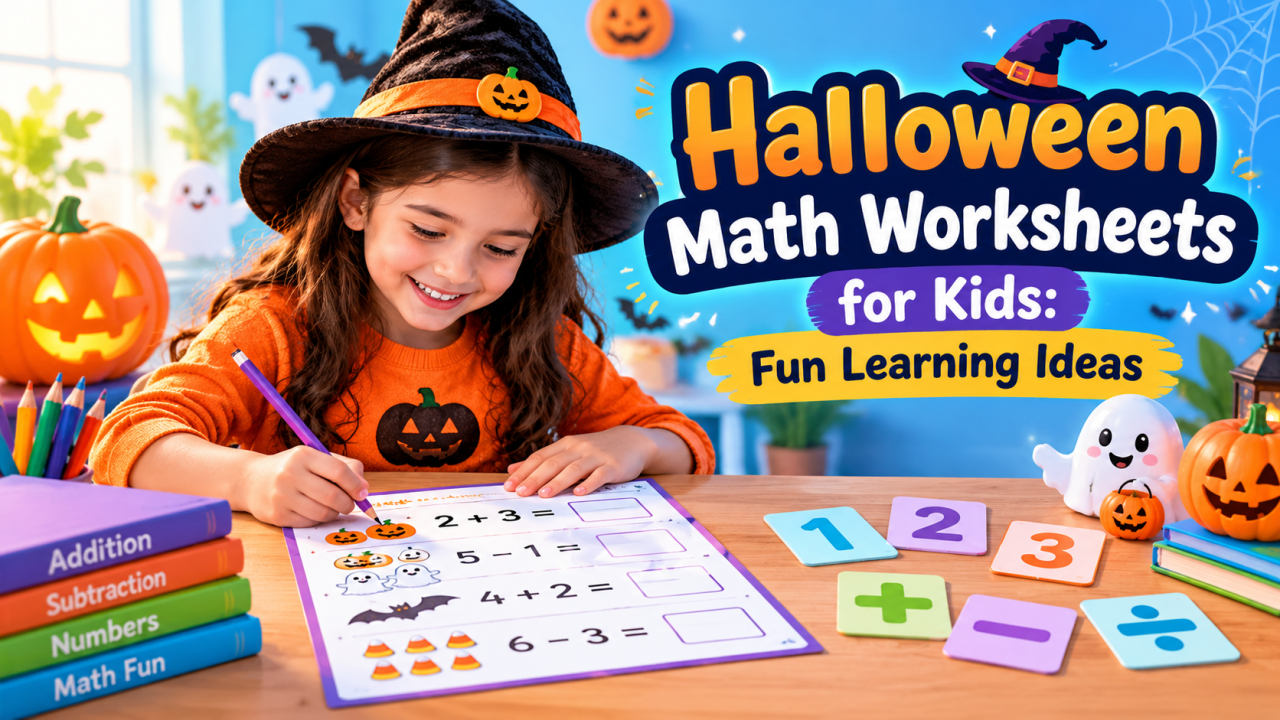
Discover fun Halloween math worksheets and learning activities for kids ages 3–10, including counting, addition, patterns, puzzles, and more.
Halloween Math Worksheets for Kids: Fun Learning Ideas
Introduction
Halloween can be a fun opportunity to make everyday learning feel a little different. Instead of asking children to complete the same type of math practice every time, parents and teachers can introduce familiar skills through pumpkins, friendly ghosts, bats, candy, monsters, and other seasonal themes.
Halloween math worksheets for kids can be useful for practicing counting, number recognition, addition, subtraction, patterns, shapes, graphing, and simple word problems.
The best Halloween math activities do more than place Halloween pictures around ordinary questions. A well-designed activity uses the seasonal theme to make the mathematical idea easier to understand, more interesting, or more enjoyable for children.
These activities can also be adapted for different ages. A preschool child might count five pumpkins, while an older elementary student could solve a Halloween-themed multiplication problem or multi-step word problem.
Why Halloween Math Activities Can Be Useful
Children can benefit from seeing familiar learning skills presented in different contexts. Seasonal activities give parents and teachers an easy way to vary practice while keeping the underlying learning goal clear.
For example:
- A counting activity can use pumpkins instead of generic objects.
- Addition problems can involve groups of Halloween candies.
- Pattern activities can alternate bats, pumpkins, and stars.
- Graphing activities can compare children's favorite Halloween characters.
- Shape activities can ask children to identify circles, triangles, squares, and rectangles.
- Simple word problems can involve sharing treats between friendly monsters.
- [Worksheets & Activities](https://thesuperkidsai.com/worksheets)
The mathematics remains the focus, while the Halloween theme provides a playful setting.
What Are Halloween Math Worksheets?
Halloween math worksheets are structured math activities that use Halloween-related themes to help children practice mathematical concepts.
They may include printable worksheets, digital activities, matching exercises, number puzzles, mystery pictures, counting pages, graphing activities, or simple word problems.
The difficulty can range from basic preschool counting to more advanced elementary-school mathematics.
Halloween Math for Ages 3–4
Younger children can practice:
- Counting small groups of objects
- Matching numbers to quantities
- Sorting objects
- Recognizing basic shapes
- Completing simple patterns
- Recognizing numbers
At this age, pictures and hands-on activities can make abstract numbers easier to understand.
Halloween Math for Ages 4–6
Children can begin practicing:
- Counting to 20 and beyond
- Number writing
- Comparing quantities
- Simple addition
- Simple subtraction
- Shape recognition
- Number matching
- Color-by-number activities
- Beginning patterns
The goal should be building confidence while keeping the activity manageable.
Halloween Math for Ages 6–8
Activities can introduce:
- Larger addition problems
- Subtraction
- Multiplication basics
- Division basics
- Skip counting
- Place value
- Graphing
- Time
- Money-based word problems
Halloween themes can make these exercises feel different from regular classroom practice.
Halloween Math for Ages 8–10
Older children may be ready for:
- Multi-step word problems
- Fractions
- Multiplication and division practice
- Data interpretation
- Geometry
- Logical math puzzles
- Challenge questions
The most important consideration is the child's current skill level rather than age alone.
10 Halloween Math Worksheet Ideas
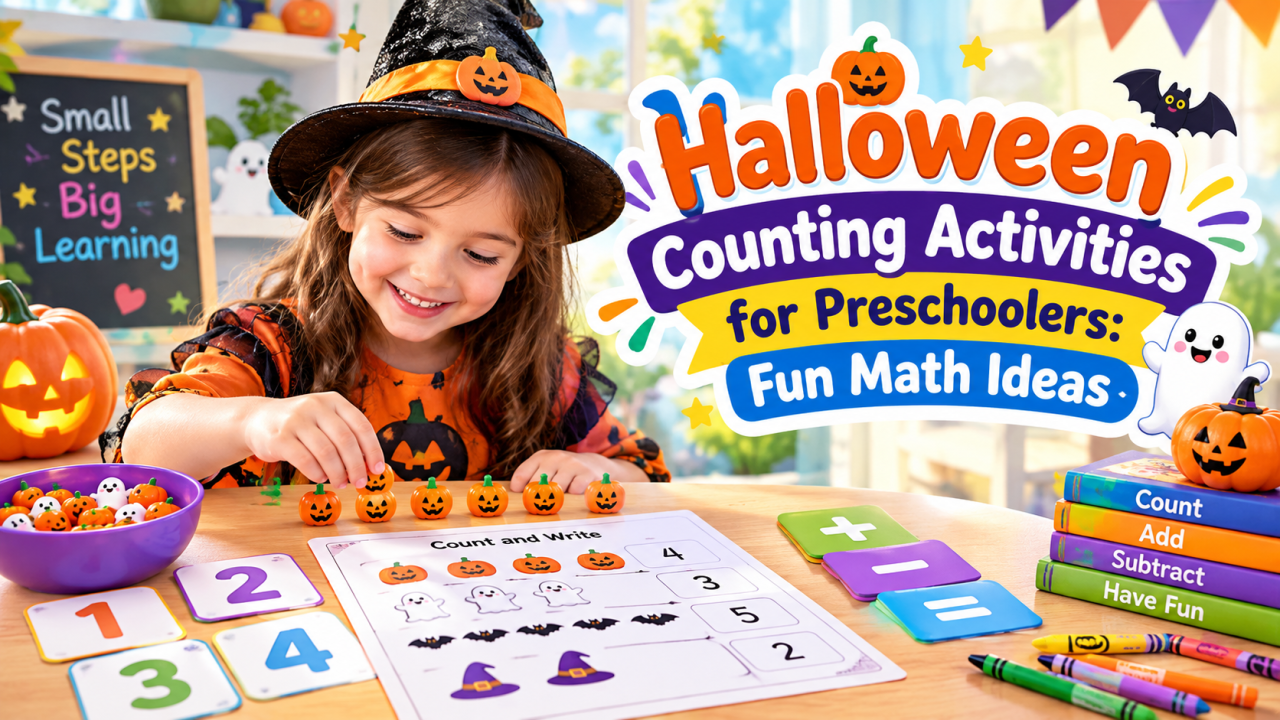
1. Pumpkin Counting
Draw or provide pictures of pumpkins and ask children to count them.
For example:
🎃 🎃 🎃 🎃
Ask:
How many pumpkins are there?
This simple activity can reinforce counting and number recognition.
For an additional challenge, ask the child to write the number after counting the objects.
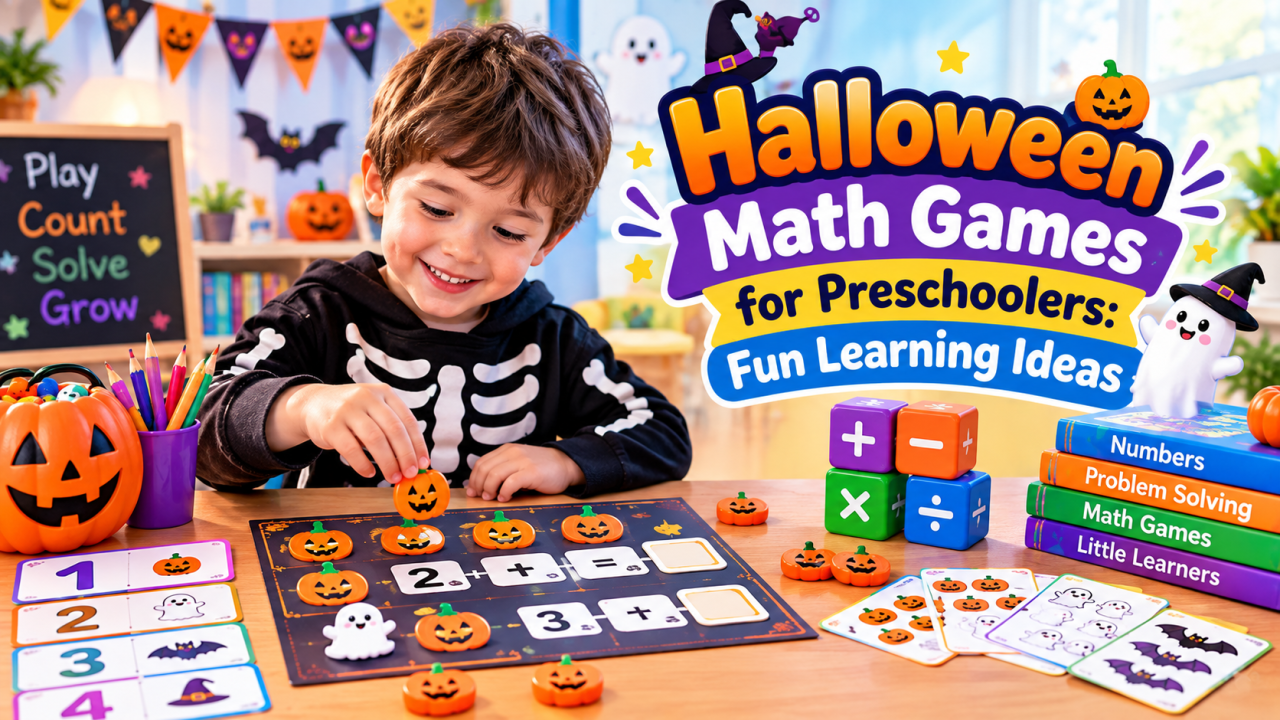
2. Candy Addition
Use pictures of candies to introduce simple addition.
For example:
🍬🍬 + 🍬🍬🍬 = ?
The child counts both groups and works out the total.
Visual addition can be a helpful starting point for young learners who are still connecting quantities with written equations.
3. Monster Subtraction
Create a simple Halloween story.
For example:
There are 7 friendly monsters. 2 walk home. How many monsters are left?
Children can draw the monsters, cross out two, and count the remaining group.
This connects subtraction with something the child can visualize.
4. Halloween Number Matching
Place numbers on one side of a worksheet and groups of Halloween objects on the other.
For example:
5 → 🎃🎃🎃🎃🎃
The child matches the written number to the correct quantity.
This can reinforce the connection between numerals and quantities.
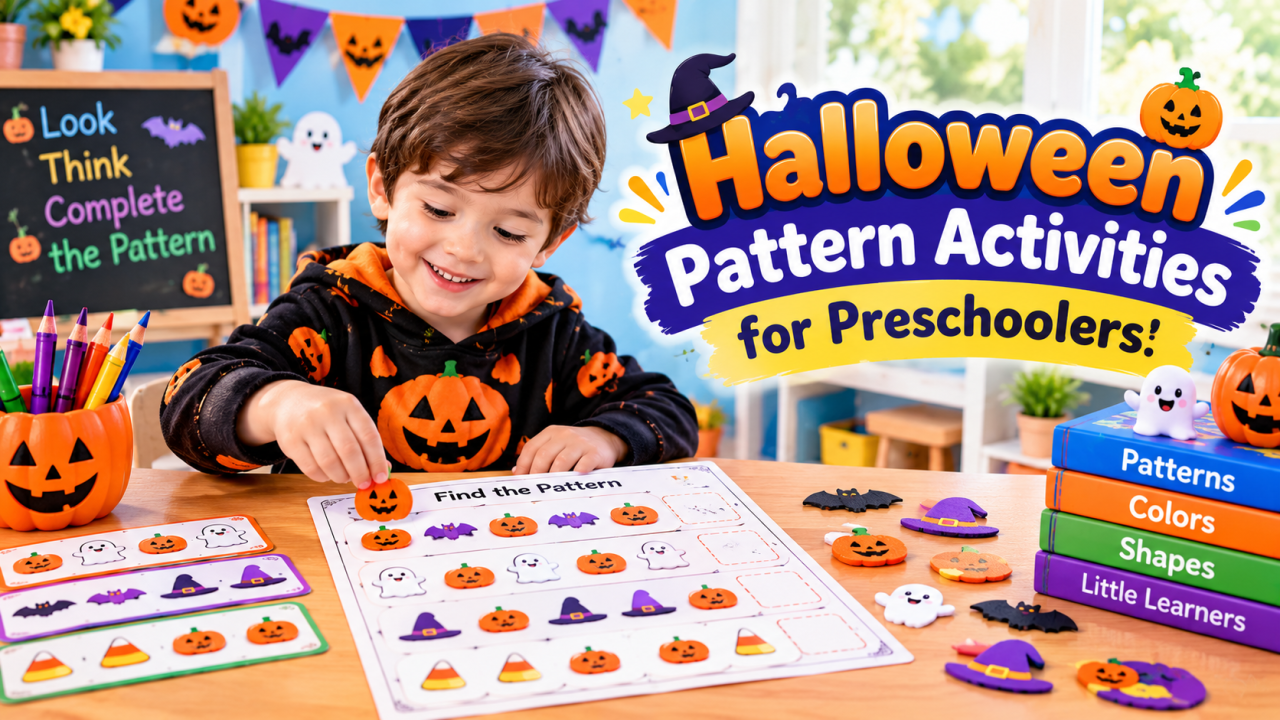
5. Spooky Patterns
Patterns are useful for early math learning.
Try sequences such as:
🎃 👻 🎃 👻 ___
Ask the child what comes next and encourage them to explain why.
For older children, introduce patterns containing three or more repeating elements.
6. Halloween Shape Hunt
Create a Halloween picture containing different shapes.
Ask children to find:
- Circles
- Squares
- Triangles
- Rectangles
You can then ask them to count how many of each shape they found.
7. Halloween Graphing
Turn a simple Halloween question into a graphing activity.
Ask:
Which Halloween character do you like best?
Children can choose between pumpkins, bats, ghosts, cats, or friendly monsters.
Record the answers in a simple bar graph.
Older children can answer questions such as:
- Which character received the most votes?
- Which received the fewest?
- How many more votes did one character receive?
- How many votes were recorded altogether?
8. Number Tracing
Preschool and kindergarten children can practice number recognition and handwriting with Halloween-themed number tracing.
Use large numbers surrounded by simple pumpkins, bats, or stars.
Keep the page uncluttered so the illustrations support the activity instead of distracting from the number.
9. Halloween Math Mystery Picture
A mystery picture can combine math questions with coloring.
For example, each correct answer can correspond to a particular color. After solving the questions, the child colors the matching sections to reveal a Halloween picture.
This format can turn ordinary math practice into a small puzzle.
10. Halloween Math Puzzle
Instead of presenting only traditional equations, include a simple logic challenge.
For example:
Three friendly monsters have different numbers of candies. Can you work out who has the most?
The difficulty can be adjusted according to the child's age and mathematical ability.
How to Make Halloween Math Practice More Engaging
A worksheet does not automatically become educational simply because it contains Halloween pictures.
Try these simple principles:
Keep the Math Skill Clear
Choose one main skill for younger children rather than putting too many different concepts on the same page.
Use Visuals With a Purpose
Pictures should help children understand the problem instead of simply decorating the worksheet.
Start With Easy Questions
Give children a few questions they can solve confidently before introducing a harder challenge.
Add Variety
Mix counting, matching, puzzles, drawing, and short problems instead of relying entirely on repetitive calculations.
Ask Children to Explain Their Thinking
After a child solves a problem, ask how they found the answer.
This can turn a worksheet from a simple answer-producing exercise into an opportunity to discuss mathematical thinking.
Keep Sessions Manageable
A short, focused activity can be more practical than asking a child to complete a long worksheet when their attention is fading.
A Simple Halloween Math Routine
Parents can turn these ideas into a short learning routine:
- Warm up by counting Halloween objects together.
- Complete 3–5 age-appropriate math questions.
- Solve one Halloween-themed puzzle or word problem.
- Draw a Halloween picture using shapes or numbers.
- Ask the child to explain one answer.
This creates a balance between direct practice and playful learning.
For Super Kids AI, these activities can also create natural opportunities to guide readers toward relevant Math, Worksheets, Puzzles, and Kids Activities content when those resources match what the child is learning.
Choosing the Right Halloween Math Worksheet
Before giving a child a worksheet, check three things:
| Question | What to Look For |
|---|---|
| Is it age appropriate? | The math should match the child's current ability. |
| Is it easy to understand? | Clear instructions and enough writing space. |
| Does the theme support learning? | Halloween visuals should add interest without creating confusion. |
The goal is useful seasonal practice, not simply giving children more pages to complete.
What Makes a Good Worksheet?
A strong Halloween math worksheet should ideally include:
- A clear learning objective
- Simple instructions
- Age-appropriate questions
- Enough space for answers
- Helpful visual elements
- A reasonable number of problems
- A progression from easier to harder questions
- Opportunities for children to think rather than simply guess
Different children need different levels of challenge. A preschool counting page and a Grade 4 multiplication worksheet may both be Halloween math activities, but they serve very different learning needs.
Natural Internal Linking Opportunities
When publishing this article on The Super Kids AI, consider linking relevant sections to:
- Math activities for interactive practice
- Worksheets for printable learning
- Puzzles for problem-solving activities
- Kids Activities for broader seasonal ideas
- Future Halloween counting activities
- Future Halloween reading activities
- Future Halloween puzzle articles
Internal links should be added only when they genuinely help the reader continue learning.
Final Part 1 Note
Halloween math activities work best when the seasonal theme supports the mathematical goal. With the right level of difficulty, even simple counting, matching, addition, subtraction, patterns, and puzzles can become engaging learning opportunities for children.
28. Frequently Asked Questions About Halloween Math Worksheets for Kids
What are Halloween math worksheets for kids?
Halloween math worksheets for kids are themed learning activities that help children practice math skills using Halloween-related pictures, characters, objects, and stories. Depending on the child's age, activities may include counting, number recognition, addition, subtraction, patterns, shapes, graphing, multiplication, fractions, and word problems.
What age are Halloween math worksheets suitable for?
Halloween math worksheets can be created for different age groups, from preschool through elementary school. Younger children may practice counting, number matching, shapes, and patterns, while older children can work on multiplication, division, fractions, graphing, logic puzzles, and multi-step word problems.
Are Halloween math worksheets useful for preschoolers?
Yes. Preschool Halloween math activities can provide simple practice with counting, sorting, matching, shapes, and patterns. Activities should use clear visuals, simple instructions, and an appropriate number of questions for the child's developmental level.
How can I make Halloween math more fun for kids?
You can make math more engaging by using pumpkins, bats, friendly ghosts, candy, monsters, and other Halloween themes. You can also combine worksheets with games, drawing, puzzles, scavenger hunts, pretend shopping, and hands-on counting activities.
Can Halloween math worksheets be used in the classroom?
Yes. Teachers can use Halloween math worksheets for independent practice, review activities, warm-ups, learning stations, partner work, or seasonal classroom activities. The difficulty can also be adjusted so students work on similar concepts at different levels.
What math skills can children practice with Halloween worksheets?
Depending on the child's age, Halloween worksheets can support counting, number recognition, addition, subtraction, multiplication, division, fractions, patterns, shapes, graphing, measurement, money, time, logic, and word-problem skills.
Should Halloween math worksheets be printable or digital?
Both formats can be useful. Printable worksheets are helpful for handwriting and screen-free practice, while digital activities can provide a more interactive experience. The best format depends on the child's learning needs, available resources, and the activity being used.
How many questions should a Halloween math worksheet have?
There is no single number that works for every child. A worksheet should contain enough questions to practice the target skill without becoming unnecessarily repetitive. Younger children generally benefit from shorter activities, while older children may be ready for longer practice or multi-step challenges.
How can parents help children with Halloween math worksheets?
Parents can read instructions, provide physical objects for counting, ask children to explain their answers, and encourage them to check their work. If a child becomes frustrated, taking a short break and returning to the activity later can be more helpful than adding pressure.
Where can I find more Halloween learning activities for kids?
Parents and teachers can explore age-appropriate math activities, worksheets, puzzles, stories, creative activities, and other kids' learning resources. On Super Kids AI, related resources can provide additional ways for children to practice and learn beyond a single worksheet.
Conclusion
Halloween math worksheets for kids can turn familiar math practice into a seasonal learning experience. From counting pumpkins and matching numbers to solving multiplication problems and Halloween-themed word problems, there are many ways to adapt math activities for different ages and skill levels.
The most effective activities are not necessarily the most complicated. A simple counting page can be valuable for a preschooler, while a logic puzzle or multi-step problem may be more appropriate for an older child.
The key is to choose an activity that matches the child's current learning needs and then use the Halloween theme to make the experience more engaging.
Parents and teachers can also combine worksheets with games, puzzles, drawing, reading, and hands-on activities. This creates a more flexible learning experience and gives children different ways to practice the same concepts.
Most importantly, seasonal learning should feel enjoyable. When children can practice math while counting pumpkins, solving friendly monster problems, creating patterns, or playing a pretend candy shop game, mathematics can feel less like repetitive practice and more like something they can explore.
Continue Learning With Super Kids AI
Finished with your Halloween math worksheet? Keep the learning going with activities that match your child's interests and learning goals.
Explore more Math activities for additional practice, try Puzzles for problem-solving challenges, or discover Kids Activities for more seasonal learning ideas.
Children who enjoy creating can continue with Art & Creativity, while those who want a different type of learning experience can explore Stories and other age-appropriate resources.
Ready for the next activity? Explore Super Kids AI and find another fun way for your child to learn, play, and practice.
Key Takeaways
- Halloween math worksheets can make familiar math practice more engaging.
- Activities should match the child's age and current skill level.
- Preschoolers can practice counting, matching, shapes, and patterns.
- Elementary students can work on addition, subtraction, multiplication, fractions, graphing, and word problems.
- Worksheets can be combined with games and hands-on activities.
- Halloween decorations should support the learning objective rather than distract from it.
- Short, focused activities can be more effective than unnecessary repetition.
- Parents and teachers can encourage children to explain their mathematical thinking.
- Related Math, Worksheets, Puzzles, Stories, and Kids Activities can provide useful next steps.